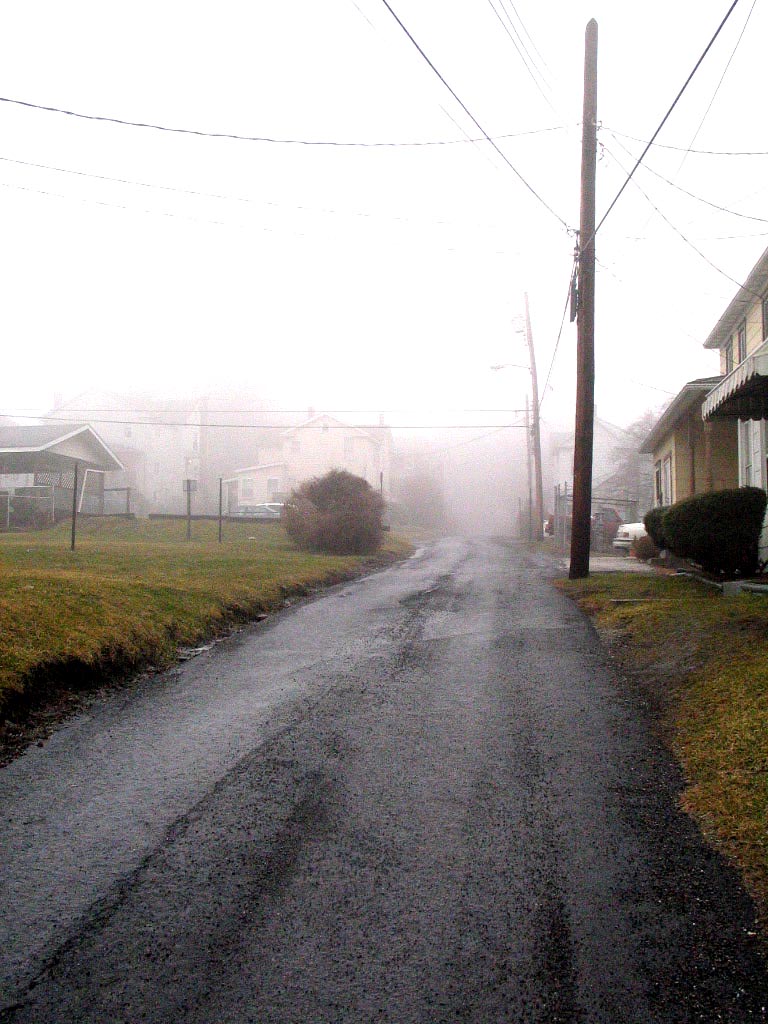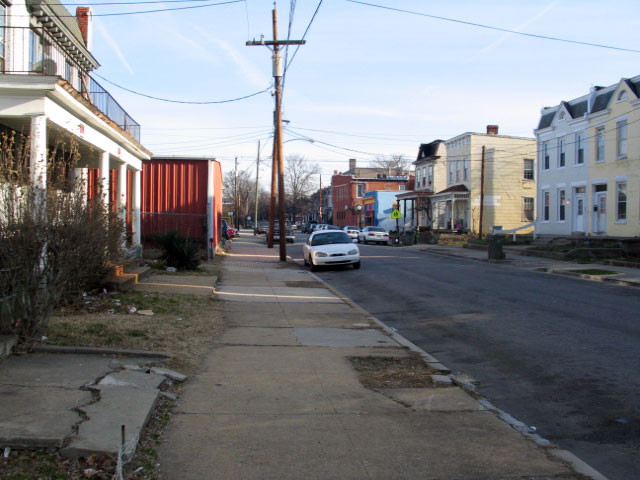




 A couple of weeks ago Style Weekly pricked my interest with a small column about "supplemental lighting" that Fan residents, along with City Councilman Bill Panetele, are working to have installed throughout the Fan district.
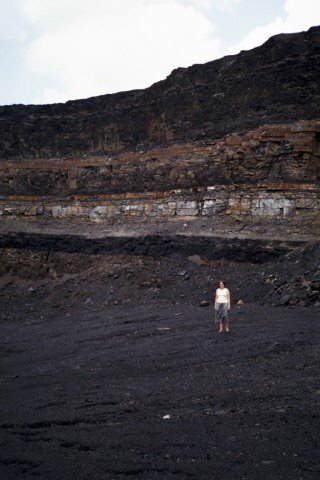
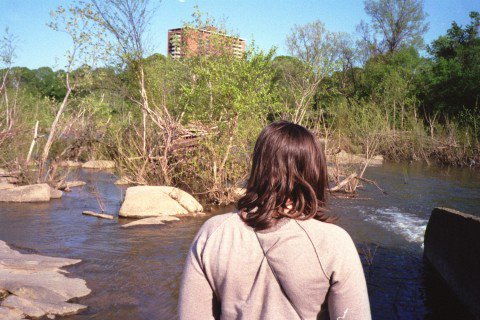
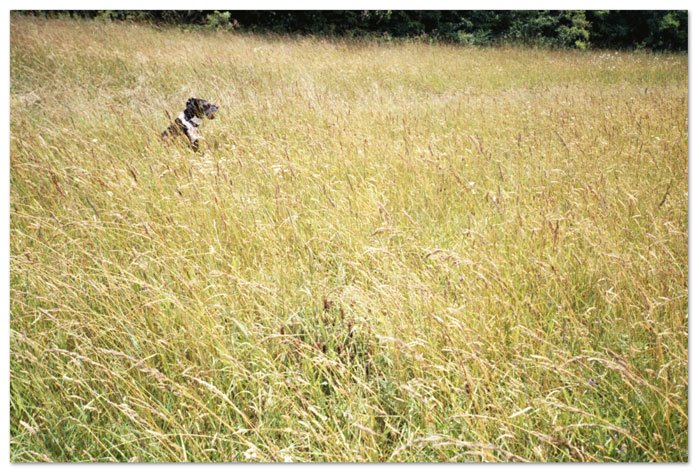 Kim took this picture of Annabelle in Frostburg's Lion's Field a few summers ago. I photograph a tree in this field each time I visit and we made a day of doing this, walking, and visiting the strip mine on the south side of town.


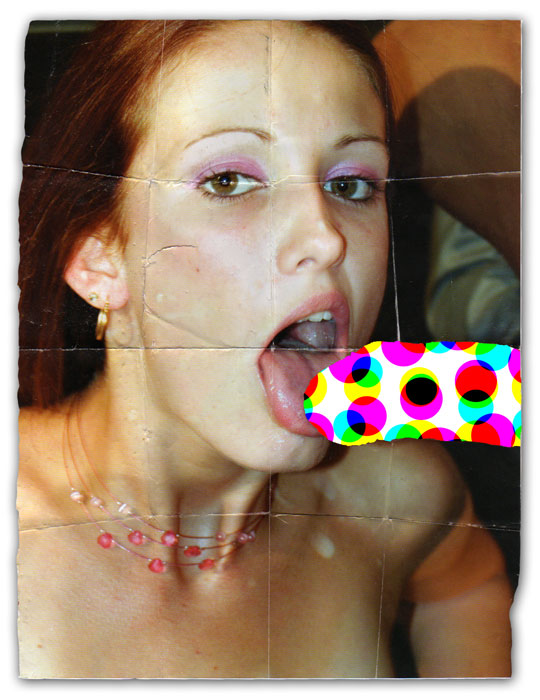 I’m going to start posting my finds here and am thrilled at the idea of sharing these images. These two items are my most recent finds. I found the porno pic on my bike ride to work as I was turning onto Granby from Floyd- it was folded up and all I could see was the color of white/pink flesh and a bit of the woman’s (?) eye. The color and quality was odd/bad enough that it made me turn around and pick it up- I figured it might have been made on someone’s desktop printer. I was surprised too see what it was, but not surprised to have found porn. I’ve found quite a bit of porn over the years (I passed up a stack of old Hustlers that were in a garbage can a little over a year ago, and the first find I ever kept was a porn magazine that my pal Jonathan and I found in the woods when we were in the fifth grade). I’d say that one of the reasons that porn is so easily found (or frequently discarded) is related to my second find of the day: it’s an old (classic?), weathered religious tract that tells the tale of a man on death row finding God (Life) while a lifer.
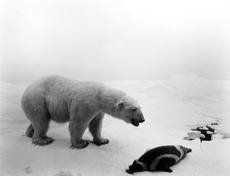 Hirsohi Sugimoto Polar Bear 1976
 I went to the jungle this past weekend.
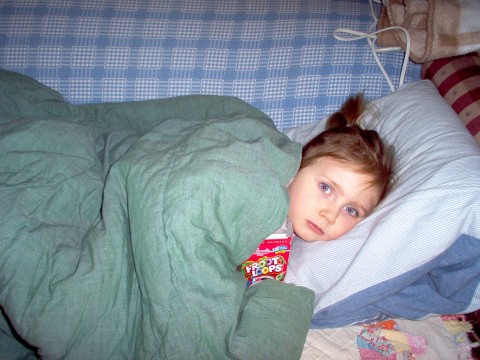 A while ago (November 2005) Susan Manger (Frostburg's grand dancer, singer, grant-writer, pilates instructor, and Mrs. to Stephen's Mr.) sent me the following email:
 Paula Modersohn-Becker, Madchenkopf 1905
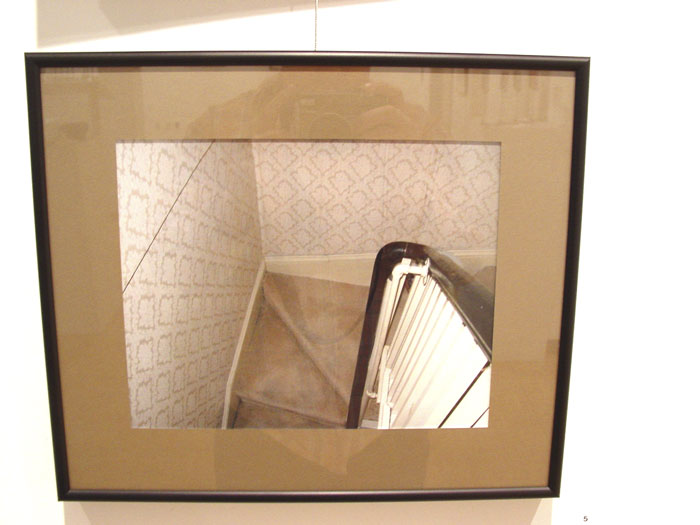 So finally here are four images from the Allegany Arts Council's 13 Annual Tri-state Photo Exhibit that I judged with Ed Dewitt at the beginning of February. My favorite is the image Stairwell by Gabriel Cramer, the seven year old son of the guy who owns The General Art Store in Frostburg (this explains the mat).
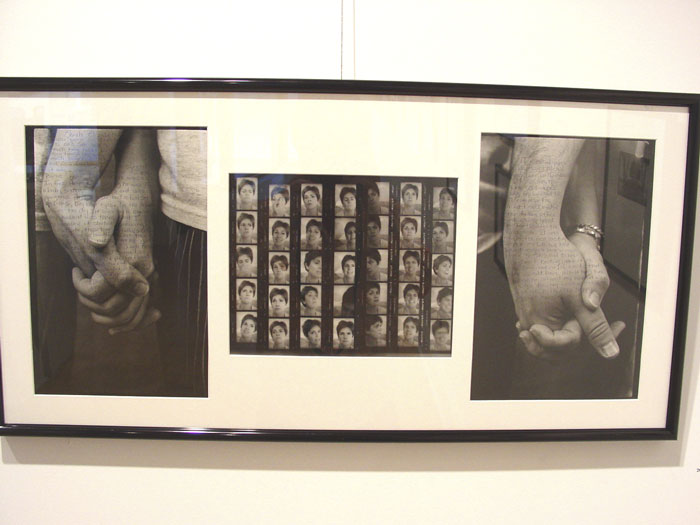 Sarah Hayes' Maternal lacks the bite that you expect before reading the text (hand written by her mom and telling of the birth of both Sarah and her brother) on the two images flanking the contact sheet. Instead, there's an unexpected tenderness, as well as the rare want to be inclusive with a work of art.
 Best of Show went to Beth Piver for her sculpture/photo Untitled. Beth does a little bit of everything- jewelry, painting, sculpture, photography and these images of a woman's face are printed on transparency film and fitted into store display frames.

 SOME MONASTERY "Machete Wounds" - SMR [Feb 2006]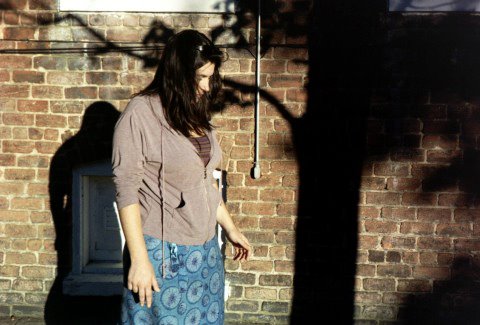

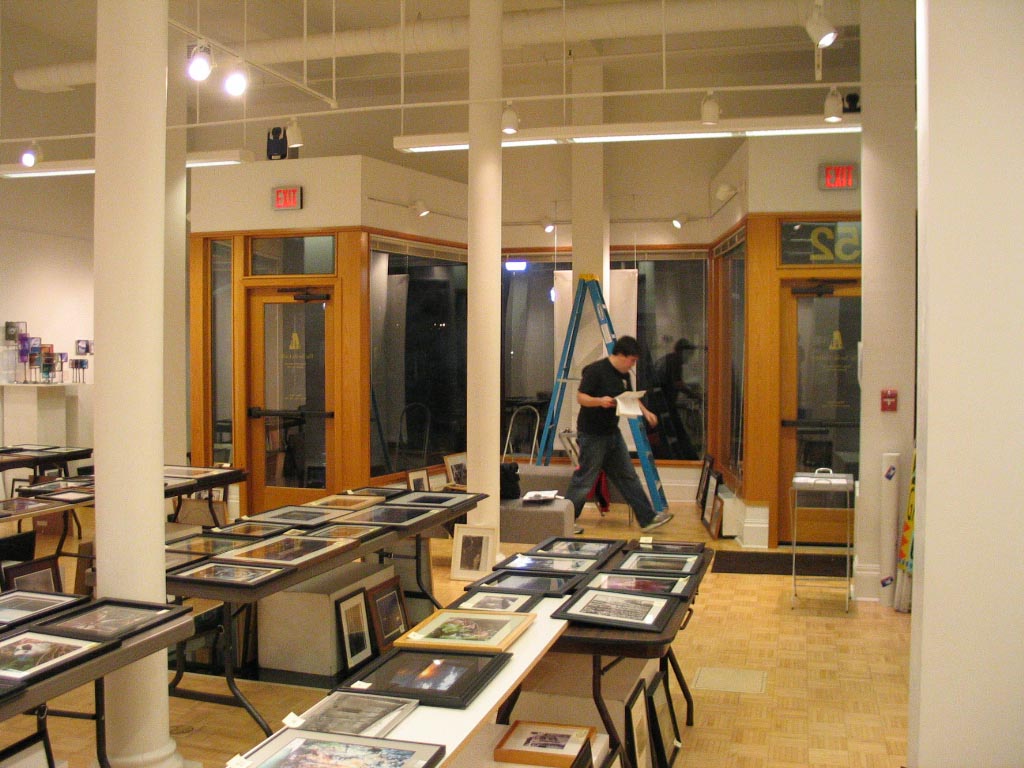 That's Ed looking at one of the 240 entries.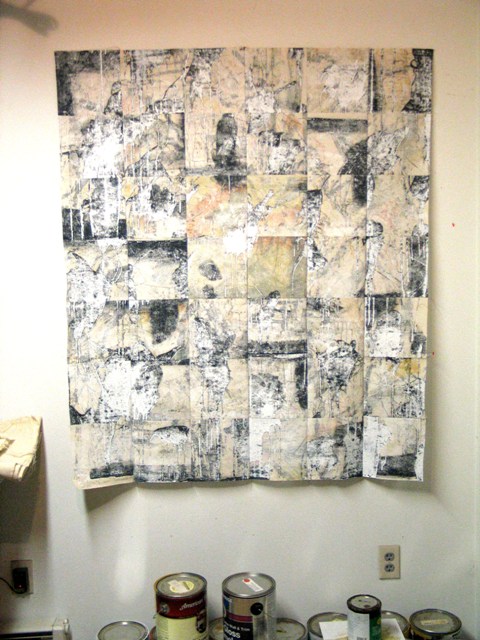
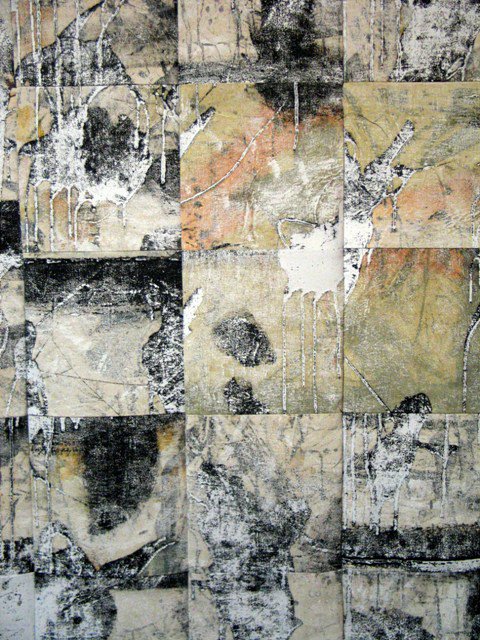
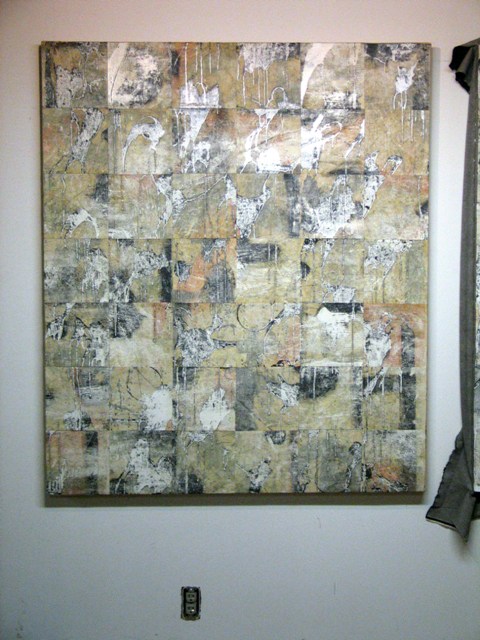
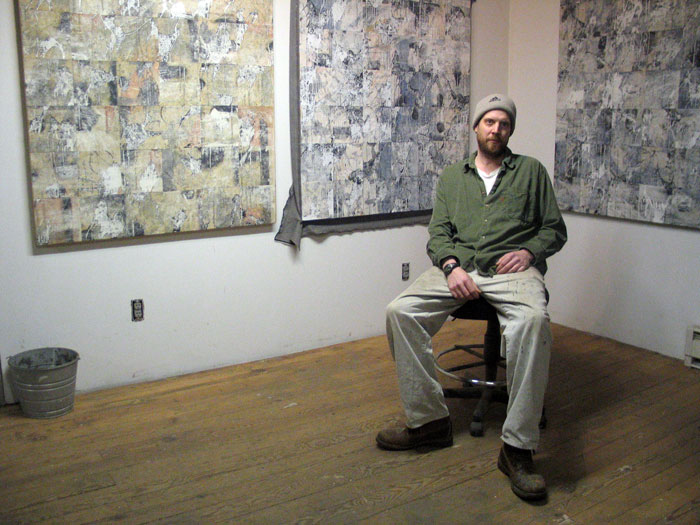 And here's Stephen (look out Banks Violette!!). Keep up the good work Stephen!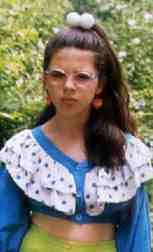


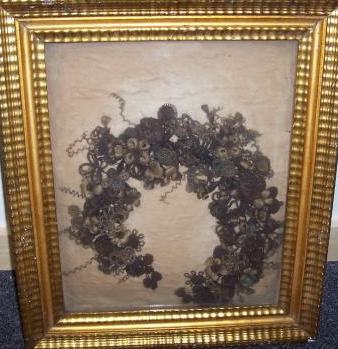 Here's a little bit of the history of made-with-hair mourning jewelry from www.victorianhairartists.com :
Jewelry made with hair is dated back to at least the 1600's, when hair bracelets were given as love tokens by both men and women. During this time one was likely to find the hair placed under glass and used as a background for initials or some other personal symbol to the wearer. Hair jewelry stayed popular until the late 1800's. Many people today believe that hair jewelry was made only for the purpose of remembering a deceased loved one. While that was one function of hair jewelry, many pieces were also made for sentimental reasons, as tokens of affection.
Queen Victoria gave pieces of jewelry made from her hair as gifts, many of these pieces were given to her children and grandchildren. Napoleon wore his watch on a chain made from the hair of his wife, Empress, Marie Louise.
There is even a museum and I bet it's worth checking out. It's in Missouri:
Leila Cohoon 's Hair Museum 1333 South Noland Road Independence, MO 64055
(816) 833-2955
I once went to the Polka Hall of Fame in Cleveland- it was great.
Filed at 4:34 p.m. ET
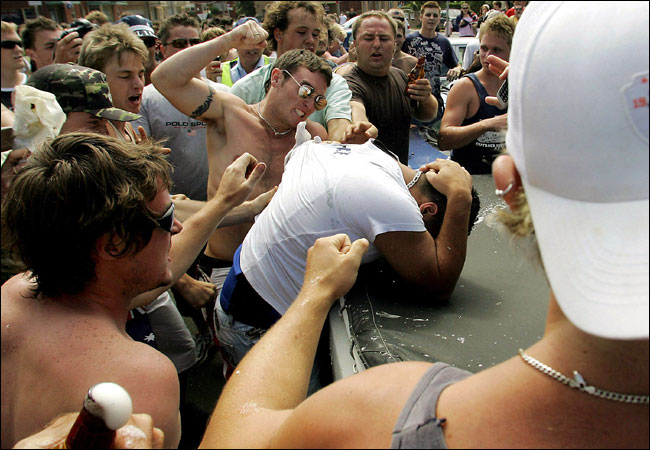
SYDNEY, Australia (AP) -- Violence spilled into a second night Monday as scores of youths drove through predominantly white suburbs of Sydney, smashing windows of cars, homes and stores and raising fears of spreading racial unrest.
Prime Minister John Howard called the violence ''sickening,'' but denied it was rooted in racism. Arab community leaders said the unrest would heighten racial tensions as cell phone text messages warned of retribution by the Arab community and attacks by neo-Nazi groups.
About 5,000 white men, many of them drunk, targeted people believed to be of Arab or Middle Eastern descent on Cronulla Beach on Sunday after rumors spread that Lebanese youths assaults two lifeguards earlier this month.
Police, who had stepped up patrols on the beach after learning of cell phone text messages urging people to retaliate for the attack on the lifeguards, fought back with batons and pepper spray.
Young men of Arab descent struck back in several Sydney suburbs Sunday, fighting with police for hours and smashing dozens of cars with sticks and bats, police said. They said 31 people were injured, including a white man who was allegedly stabbed in the back, and 16 arrested.
Carloads of youths also tore through the suburbs Monday night, attacking vehicles and throwing bottles through windows. While only one person was reported injured and six arrested, there appeared to be more damage to cars and stores than on Sunday.
Television images of Sunday's riot shocked Australians, who pride themselves on tolerance and credit an influx of immigrants with helping build up the country after World War II.
Tensions between youths of Arabic and Middle Eastern descent and white Australians have been rising in recent years, fueled by the Sept. 11 attacks in the United States and deadly bombings on Bali that killed 202 people, including 88 Australians.
Many Muslims also were angered over Howard's decision to contribute troops to the U.S.-led invasion of Iraq in 2003.
The president of the Islamic Friendship Association of Australia, Keysar Trad, said the violence was ''bound to happen'' following angry calls to radio talk shows after the attack on the lifeguards. Police have denied the assault on the lifeguards was racially motivated.
The unrest recalled three weeks of rioting in France that began in the suburbs of Paris on Oct. 27 and spread nationwide, baring frustration in communities with high immigrant and Muslim populations.
Police spokesman Paul Bugden said he did not have descriptions of those involved in Monday night's rampage, but said it was linked to Sunday's rioting.
Witnesses told an Associated Press photographer that some youths involved in the attacks were Middle Eastern or Arabic in appearance and others wore ski masks. Australian Broadcasting Corp. reported that police said men of Middle Eastern appearance were involved.
New text messages calling for more violence reportedly were being circulated. ''We'll show them!'' one message said, according to The Australia newspaper.
Howard defended Australia's policy of tolerance, noting that the nation has successfully absorbed millions of foreigners. ''I do not accept that there is underlying racism in this country,'' he said.
His comments were clearly aimed at immigrants and their families. Howard repeatedly has come under criticism for refusing to apologize for past government abuses of Aborigines, Australia's poorest and least educated minority group.
Morris Iemma, premier of New South Wales state, said police would find those behind the violence. ''Let's be very clear, the police will be unrelenting in their fight against these thugs and hooligans,'' he said.
About 300 people of Arab descent demonstrated against Sunday's attack outside one of Sydney's largest mosques, amid tight security.
''Arab Australians have had to cope with vilification, racism, abuse and fear of a racial backlash for a number of years, but these riots will take that fear to a new level,'' said Roland Jabbour, chairman of the Australian Arabic Council.
In the 2001 census, nearly a quarter of Australia's 20 million people said they were born overseas. The country has about 300,000 Muslims, most in lower income suburbs of large cities.
A resident of the predominantly white suburb of Brighton-Le-Sands, Steven Dawson, said a bottle thrown through his apartment window Monday showered his 5-month-old son with glass, but did not hurt the boy.
Horst Dreizner said a car was rammed through the front doors of his denture store. ''Personally, I think it is only the beginning,'' he said by telephone.
The violence distressed residents of Sydney.
''What we have seen yesterday is something I thought I would never see in Australia,'' Community Relations Commission chairman Stepan Kerkyasharian told Sky News.
Religious leaders urged calm, with Roman Catholic Archbishop Cardinal George Pell urging people to ''reject the extremists in both camps and work together so that this is the end of major disturbances, not the beginning of something worse.''
Installment One: A Series of Unlikely Vignettes
What follows here is first in a series of installments which, when complete, will be the entirety of the thesis I wrote for an MFA in Photo and Film at Virginia Commonwealth University. The title of the thesis (think of it instead as a hefty magazine article and it could possibly be tolerable) is Posthumous- which was also the title of the exhibit that I had at the end of grad school- it is pages and pages long and was required in order to complete the degree. Fear not, an exhaustive description of Posthumous is down the road, but first, there has to be some background. This first installment is titled "A Series of Unlikely Vignettes" and it relates... well you'll see what it relates...
Disclaimer: Remember that this is the result of two years of grad school (there is a perverse thrill to "publishing" my thesis as a Blog). Sorry too for any weird glitches that resulted from copying and pasting.
I grew up in Marlton, Marlton is a suburb of Upper Marlboro,
Q: Did you know that Christa McAuliffe had dandruff?
A: They found her Head and Shoulders.
showed a transparent man approaching, and eventually touching, the breast of a sleeping, nude woman. A few pages away, was another sequence by Michals: Death Comes to the Old Lady.
Disclaimer: Remember that this is the result of two years of grad school (there is a perverse thrill to "publishing" my thesis as a blog). Images will be posted asap.
The Dead People in my Paper: Obit to Self: April 10, 2005
Only that which narrates can make us understand.
-Susan Sontag
Two months ago I watched the film Hotel Rwanda and was infuriated. I wasn’t angered
by the film itself, but by the idea that the lives of 800,000 people, and the history of three
months of genocide, had been compressed into a one hour and fifty minute movie. That
Hotel Rwanda could potentially be viewed as a sort of definitive representation of the
Rwandan crisis during 1994 is problematic. If I accept that media such as movies,
television and newspapers are (in part) eligible to relay to me the social history of the
world, I feel I must ask these questions: What did the director of Hotel Rwanda, Terry
George, leave out? What parts of the “story” of
a dynamic film? What, specifically, did Terry George want me to remember about what
happened in
supporters of the film? What am I “left with” –in terms of understanding the situation after
watching this movie? Unfortunately, what I was “left with” was an impotent message of Hope. Not to deride the many works of art whose message is similar, but, is Hope enough to ask for in the face of 800,000 murdered people? And, are the conventions of the motion picture –its filmic clichés- like sweeping, gestural camera movements, professional actors, use of archetypical myths (Don Cheadle as Luke Skywalker?), a string section, a conventional, linear narrative structure, mega million dollar production and marketing- the best way to address the horror of the genocide in
shelves in this section could be the slim cases holding pale evidence of what negligently gets passed as history: The Killing Fields; Cry Freedom; Romero; In the Name of the Father; The Magdalene Sisters; Schindler’s List; Johnny Got His Gun; Land and Freedom; Missing…
Photography implies that we know about the world if we accept it as the camera records it. But this is the opposite of understanding, which starts from not accepting the world as it looks. All possibility of understanding is rooted in the ability to say no.
–Susan Sontag
Similar to movies about atrocities, photographs that depict the “human condition” (war, disease, death, famine…) rely on the concept of simplifying (compressing) information in order to deliver efficient, palatable, and ultimately marketable stories. These stories allow the viewer the illusion of feeling informed and empathetic, while remaining free of being implicated in the events they depict. Photography, a medium whose ubiquity we are forever subject to, is plagued by problems. One problem is the weight of photography as a representational medium. As Roland Barthes wrote, photographs are an “emanation of the referent”. This emanation gives the photograph the power to convince its viewer that its ability to represent its subject- in a convincing likeness- implies an understanding of its subject. This ability to represent with the camera- to bear witness, to document, to show- has carried with it a sense of responsibility that has left the history of the medium peopled with liberal photographers. These photographers hope that their images not only attest to what it is “happening” outside of our homes- they strive for their images to affect positive change in the situations they depict. This sense of responsibility to the referent is photography’s weight. Although these aspirations may be asking a lot of the medium, the seeming naiveté of these photographers should not be derided. Larry Burrows’ photographs from
against the situations they documented. In the case of
While the camera functions to document, it is also a device whose parameters act to edit its subject. This edited view the camera provides is determined by a number of factors: the format of the camera; the focal length of the lens; the type of film used; and the subjective choices involved in the composing, and outputting of the final image. Just as Hotel Rwanda was ultimately a movie affected by the forces governing the creation and distribution inherent to the conventions of movie making, the war photograph is ultimately nothing more a piece of paper, or a series of zeros and ones that represent a slim, trace of the world that has been transformed by the camera, and its operator. And, like a major motion picture, the dissemination of photojournalistic images is determined by the amount of capital they solicit.
Not only in the case of atrocities however, do photographs act as evidence. Snapshots in family albums, images from the Hubble telescope, high school yearbooks, surveillance, and satellite images, all function as proof. These images are permitted to do this because as a lens based culture (Coleman, 1989) we have learned to believe that a photograph represents something true. Regardless of the developments in imaging technology that allow an image to be manipulated easier than ever before, we still believe most of what we see and read.
These issues of accuracy, fallacy, and the camera’s image provoked by Hotel Rwanda, are similar to those Alfredo Jarr addressed with his series of work from the latter half of the nineties called Rwanda Projects. In his book Between the Eyes: Essays on Photography and Politics, David Levi Strauss details Jarr’s dealing with the limitations of photojournalism, while trying to convey the slaughter of
But the camera never manages to record what your eyes see, or what you feel at the moment. The camera always creates a new reality. I have always been concerned with the disjunction between experience and what can be recorded photographically. In the case of
Jarr’s frustrations led him to create works that relied more on the text he gathered, than it did the 3000 pictures he took during a visit to the country four months after the massacre. The histories that Jarr’s work tells (such as the piece The Eyes of Gutete Emerita) are complex, interactive, and unlike anything that would have been read in newspapers or seen on television in 1996. By pairing grueling, descriptive text with little or no photographic imagery, Jarr’s work forces the viewer to access their own data bank of "human atrocity-as-it-is-represented-by-photojournalism” in order to “see” what the people of
How many of the images we see in the mass media, in textbooks, and in other vehicles, are such spurious, falsified “factoids”? Does anyone in the field consider the consequences to the subjects of such images generated by such misuse? And, on a larger scale, the consequences to the citizenry when its informational network is thus compromised and corrupted?
-AD Coleman.
My frustrations over Hotel Rwanda led me to think about the relationship between the
photograph and the media, history, editing, and the compression of experience. I began to
ask where in the newspaper, and where in life, is the active compression of history frequent, and commonly accepted as fact? This questioning led me to the obituary. Reading the obituaries is a hobby of mine; on Sunday mornings I scan the “obits” looking not for someone I know, but for someone who looks (or feels) like someone I may know. Basically, I scan the obituaries looking for myself.
With Hotel Rwanda, and the work of Alfredo Jarr in mind, I became interested in writing my own obituary- what history could I tell of my 32 years by writing it pre-mortem? A cursory search on Google for obituaries yielded sites suggesting that business professionals write their own obituaries at the start of their careers. It’s thought that by focusing on their legacy, these professionals could have a clear idea of what their longterm goals were, and work accordingly to attain them. I thought that by adopting this corporate model to assert my motivations as an image-maker, I could put to use the gravity, and severity of the obituary to make a proclamation of love and honor, toward my community of friends and family. Could I channel the negativity that my concerns with compression were fueling into something positive? Could something good come out of my frustration?
The activity of an artist staging their own death is not new: the Russian Suprematist painter Kazimir Malevich designed and painted his own coffin before his death in 1935; in his book Autobiographies, published in 1981, the writer and artist Richard Kostelanetz included the obituaries he had written for himself since he was an undergraduate at
I deduced that I could use the obituary to employ a sanctioned form of communication to aid in asserting my motives within an environment that had previously frowned on my exclamations of love and community. With the obituary I felt I could use a cold, sterile device to say something warm. My original plan to write an obituary of only 100 words proved impossible- my first draft totaled 981 words. I thought that if I wrote the obituary well enough, the voyeuristic thrill of reading such a macabre, hubristic document would sustain my readers. This version proved too long. For the piece Obit to Self: April 10, 2005, I decided that I would have the obituary and an image of myself printed in The
“In memory of an artist, teacher, friend, colleague and lover who through his photographs of friends and family, worked to honor, celebrate and strengthen the community he loved”.
For the accompanying self-portrait that was printed above the text of the obituary, I was conscious of trying to look as alive as possible. Knowing that the community I was addressing would be reading these words, I wanted to have my image staring directly at them after their having read the text. The intensity of my stare is meant to mirror the sincerity of my intentions. For the presentation of the piece, I included of all three pages of the Washington Post’s obituary section in a single frame. The inclusion of all the other people’s photographs and obituaries was intended to highlight the role that the newspaper, and the obituary, plays in compressing history within our culture. Among the three pages of the newspaper and all the other people being memorialized on that day, I present myself as one of many, and, nothing more than a trace of what I may, or may not be.
Writing my own obituary, and having it printed, enabled me to use photography, and the newspaper- two vernacular devices- to write a portion of my own history, while (hopefully) facilitating the realization of my intentions. It is my intention to use these devices to appeal to the viewer’s predisposition to believe what is presented to them in a newspaper, and declare what my work does. These devices create the condition/illusion of the projected action whether or not this is actually the case. By saying that my work celebrates and honors my community, this idea is planted into the minds of people who do and do not know me. The conventions of the devices utilized, coupled with the resultant assumptions these devices facilitate, allow my assertions to become a form of truth.
 For over a month a magazine sat on the radiator in my bathroom- I rarely opened it and daily I read the following quote :